

Marine LEDs: Choose Underwater Lights That Last

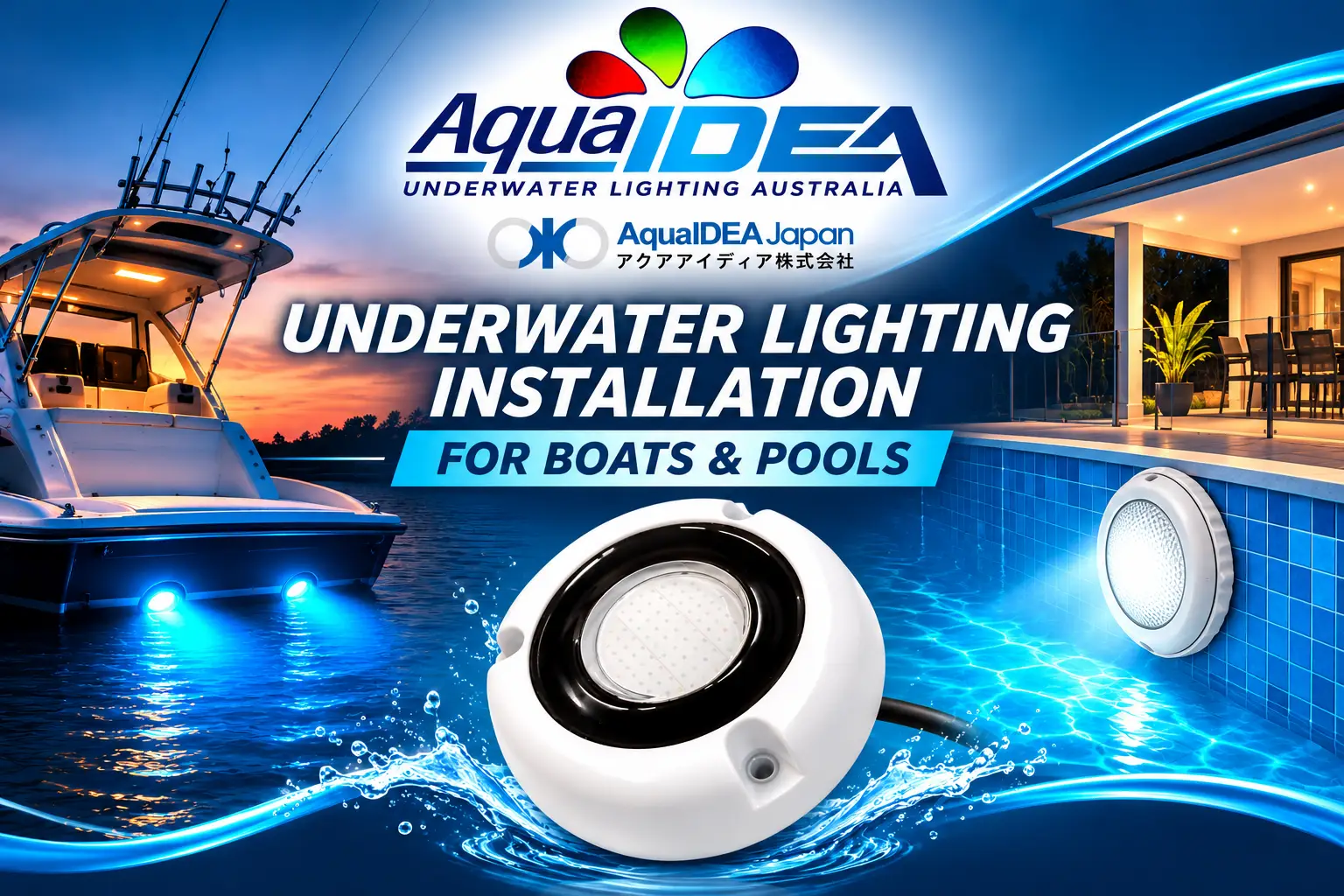
A pair of well-chosen marine LEDs can change the character of a vessel after sunset. They define the swim platform, bring clarity to the waterline and give a yacht, cruiser or sportfisher a more considered finish. For pools, underwater lighting makes the water a feature rather than a dark space at the edge of the entertaining area.
The result, however, depends on more than brightness. Mounting position, beam spread, colour capability, cable routing and water-ingress protection all determine whether the installation looks exceptional for years or becomes an expensive retrofit. For Australian owners, builders and installers, selection should begin with the environment and the intended visual effect.
What marine LEDs need to withstand
Underwater lights operate in one of the least forgiving locations on a boat. Saltwater, vibration, UV exposure, changing water pressure and regular cleaning all place demands on the housing, lens, seals and cable entry point. A light that performs well in a sheltered, occasional-use setting may not suit a transom that spends long periods in saltwater.
This is why ingress protection matters. IP68 indicates equipment designed for continuous immersion under conditions specified by the manufacturer. IP69 adds protection against high-pressure, high-temperature water jets. Neither rating should be treated as a substitute for correct installation, but they are valuable indicators of the engineering standard required for submerged and washdown-exposed equipment.
Material quality matters just as much. The housing must suit the mounting surface and the marine environment, while the lens needs to retain clarity through repeated exposure to water and cleaning. Japanese-made underwater lighting is valued for this attention to build quality, precision sealing and consistent performance over long service periods.
For pools, the conditions differ but the requirement remains high. Pool chemistry, prolonged immersion and installation access all need consideration. Use lighting designed for the specific pool application, and ensure the full electrical system is specified and installed in line with applicable Australian requirements.
Choose the right marine LED mounting style
The first practical decision is how the fitting will sit on the vessel. The two common approaches are transom-mounted and flush-mounted lights. Each can create an impressive underwater effect, but they suit different hulls, projects and installation preferences.
Transom-mounted lights
A transom-mounted light is fixed to the exterior surface of the transom. It is often the more straightforward choice for a retrofit because it can reduce the scope of hull modification compared with a through-hull fitting. The visible fitting can also complement the hardware and lines of the stern when selected carefully.
This format suits owners who want a premium upgrade without extensive structural work. Positioning is critical: the light needs a clear path into the water, adequate separation from trim tabs, drains and running gear, and a route for the cable that can be sealed correctly. A poorly located surface-mounted fitting can create unwanted glare, uneven illumination or installation complications.
Flush-mounted lights
Flush-mounted lights sit more discreetly within the hull or transom surface. They deliver a refined, integrated appearance that is particularly suited to new builds, major refits and yachts where clean exterior lines are a priority.
The trade-off is installation complexity. Flush mounting requires precise cut-outs, careful sealing and a clear understanding of the hull construction. It is generally best planned early in a build or completed by an experienced marine professional during a suitable refit stage. When the vessel is designed around the lights, cable access, mounting depth and symmetry are easier to achieve.
For either style, do not choose purely on appearance. Confirm the mounting thickness, fitting dimensions, cable requirements and service access before committing to the installation.
Brightness is only part of the lighting result
Higher output is not always the answer. Underwater illumination needs to suit the size of the vessel, the intended viewing distance and the water conditions where it will be used. Clear tropical water reflects light differently from a silty marina, and a compact day boat needs a different solution from a large motor yacht with a broad transom.
Beam angle has a major influence on the finished look. A wider beam can wash the stern and surrounding water with an even glow. A more focused beam can produce stronger visual definition and reach further from the hull. Multiple lights positioned evenly often look more sophisticated than one extremely powerful fitting, especially on larger transoms.
Consider how the lights will be viewed. If the goal is to light a swim platform and create a welcoming area at anchor, a broad, balanced spread is usually preferable. If the objective is dramatic water effects for an evening event or a premium marina presentation, output and colour control may take greater priority.
Avoid treating underwater lights as navigation equipment. Their role is aesthetic illumination and local visibility around the vessel, not compliance lighting or a replacement for proper deck, navigation and safety systems.
White or RGB marine LEDs?
Single-colour white lights remain a strong choice for owners who want a timeless, high-end finish. White illumination reveals the movement and texture of the water, suits most hull colours and tends to complement a restrained exterior lighting scheme. It is also straightforward for owner-operated vessels and commercial applications where a consistent presentation is preferred.
RGB lighting adds flexibility. It allows different colours and scenes to suit the occasion, the vessel’s styling or an entertaining area. Blue remains a popular underwater choice, while warmer and more distinctive colours can create a striking night-time signature. For pool installations, RGB capability can make the water a centrepiece for outdoor living without changing the physical fittings.
The right option depends on how the asset is used. A builder specifying a fleet of premium vessels may favour white for a consistent finish. A yacht owner who regularly entertains may value RGB control. In either case, assess the controller, switching arrangement and compatibility requirements before installation. Colour-changing capability is only enjoyable when it is simple and reliable to operate.
Installation details that protect the investment
The light itself is one part of the system. Most long-term issues arise from installation details: an unsuitable cable route, inadequate strain relief, a compromised seal or an inaccessible connection point. These details deserve attention before the first hole is drilled.
Plan the location from outside and inside the hull. Externally, allow for water flow, trim hardware, platform supports and visual symmetry. Internally, identify a dry, accessible route for cabling and connections. Allow sufficient cable length without creating unsupported loops or areas vulnerable to chafe.
Use compatible sealants and fastening methods for the hull material and fitting design. Follow the manufacturer’s instructions for torque, sealing surfaces and cure times. Over-tightening can distort a seal; under-tightening can leave an incomplete interface. Both can compromise water resistance.
Electrical work should be completed by a suitably qualified professional. This is especially relevant for pool lighting, where electrical safety, transformer selection, earthing arrangements and applicable standards require careful attention. On vessels, the installer should also consider circuit protection, voltage drop, switching, corrosion resistance and access for future diagnostics.
A short commissioning check is worthwhile. Confirm every light operates as intended, test colour functions where fitted, inspect the visible seal line and verify that all connections are protected and labelled. For trade installations, recording the model, location and wiring details helps future servicing and gives the client confidence in the finished project.
A specification approach for builders and trade partners
For boat builders, pool builders, retailers and dealers, underwater lighting should be specified as part of the overall finish rather than added late in the project. Early selection gives the team time to coordinate cut-outs, wiring paths, switching and visual placement with the build schedule.
A clear specification should cover mounting type, number of lights, colour option, electrical requirements, ingress rating and the intended operating environment. It should also identify who is responsible for each stage of installation and commissioning. This reduces site uncertainty and supports a more consistent outcome across multiple projects.
AquaIDEA supplies premium Made-in-Japan underwater lighting for Australian marine and pool applications, including transom-mounted and flush-mounted options in white and RGB configurations. For trade partners, selecting proven high-specification fittings supports a better handover, a stronger client impression and fewer compromises when the project is complete.
The best underwater lighting is rarely the most complicated choice. It is the system that fits the vessel or pool properly, suits the way it will be used and has been installed with the same care as the asset it illuminates. Start with that standard, and the water will do the rest.


Comments