

Best Pool Lights for Renovations That Last

A pool renovation can look complete in daylight yet feel unfinished after sunset. The best pool lights for renovations do more than make the water visible: they define the pool’s depth, bring out tile and interior colours, improve night-time use and give the whole outdoor area a more considered finish.
For Australian pool owners and trade professionals, the decision should start with the existing structure. Light placement, cable condition, wall penetrations and the condition of the pool shell will determine whether a straightforward upgrade is possible or whether the renovation needs a more considered lighting plan. Selecting a premium underwater light is only part of the job. The right fitment and installation approach are what turn strong lighting performance into a lasting result.
Best Pool Lights for Renovations: Start With the Existing Pool
A renovation is not a new build. In many cases, the original light niche, conduit and cable route must be assessed before a replacement fitting is chosen. This is particularly relevant for older concrete pools, fibreglass pools and tiled pools where changes to the wall can add cost, create waterproofing risk or require surface repairs.
The simplest path is often a replacement that works with the existing mounting arrangement. If the current fitting sits within a niche, a compatible niche-mounted solution may reduce changes to the pool wall. Where a renovation includes resurfacing, retiling or major shell repairs, it can be the right time to consider a flush-mounted light for a cleaner architectural finish.
Surface-mounted or transom-style fittings can also suit particular retrofit applications where cutting a new recess is not practical. The right choice depends on wall construction, available cable access and the visual outcome required. A pool builder or licensed electrician should inspect the existing installation before specifications are finalised.
Choose a Mounting Style That Matches the Scope
The lighting format should support the renovation rather than complicate it. A light that looks ideal in a product image may be unsuitable if its mounting depth, cable entry point or fixing pattern does not work with the pool’s existing structure.
Flush-mounted lights for a refined finish
Flush-mounted lights sit close to the pool surface and are a natural choice when the renovation includes new tiles, render or interior finishes. Their low-profile appearance keeps attention on the water rather than the fitting. They are often selected for premium concrete pools where a clean, integrated result matters as much as output.
This approach requires careful planning. The recess, cable route and sealing details need to be completed accurately before the interior finish is applied. It is usually more economical to do this during a substantial renovation than as a stand-alone alteration later.
Surface-mounted lights for practical upgrades
A surface-mounted option can be a more efficient solution when the pool shell is sound and the project is focused on replacing outdated lighting. It may avoid extensive concrete cutting and reduce disruption to an existing interior. This makes it especially useful where a homeowner wants an immediate visual lift without turning a lighting upgrade into a major structural project.
The trade-off is appearance. A fitting that projects from the wall can be more visible, so its size, finish and position should be considered carefully. Good placement still produces a premium result, particularly in pools where the fittings are positioned below the primary sightline.
White or RGB Pool Lighting?
The colour decision changes how the pool is used and perceived at night. Neither option is automatically better. It depends on whether the goal is a calm, architectural setting or flexible lighting for entertaining.
Single-colour white lighting remains the strongest choice for many premium renovations. It provides clear visibility, presents water in a natural way and complements most landscape lighting schemes. Warm white can soften stone and timber surrounds, while a cooler white can give pale tiles, contemporary finishes and blue water a crisp appearance. The selected colour temperature should be viewed against the actual pool interior, not chosen in isolation.
RGB lighting gives owners the ability to shift the atmosphere for different occasions. A subtle blue can create a resort-style look, while changing colours can add energy around entertaining areas. The best RGB installations are not necessarily the brightest or most animated. They are programmed and controlled in a way that makes colour a feature when wanted, while retaining a composed everyday setting.
For trade projects, ask the client how they use the pool after dark. A family pool used for evening swimming may benefit most from consistent white illumination. A pool designed around alfresco entertaining may justify the additional flexibility of RGB. The control method should be equally clear to the owner, whether that is a wall control, remote or integrated pool automation.
Output Is About Coverage, Not Just Brightness
More light is not always better. Excessively bright fittings can create glare from the terrace, overwhelm reflective pale finishes and make the water feel flat. Too little output leaves dark corners and reduces the usefulness of the pool after sunset.
Start with the pool’s length, width, depth and shape. A long rectangular pool needs even coverage along its length. An L-shaped pool, curved design or pool with steps, ledges and deep ends may need multiple lighting zones to avoid shadowed areas. Dark interiors absorb more light, while white, silver and pale blue finishes reflect it strongly. Mosaic tile can add sparkle but may also make high-output light appear more intense.
Position matters as much as fixture output. Lights are generally arranged to project across the pool rather than directly toward the main viewing area. Consider the house, alfresco zone, seating and approach paths. The aim is to see illuminated water, not the glare of the light source. In a renovation, this may involve retaining some existing locations while adding another fitting to improve balance.
Underwater Durability Cannot Be an Afterthought
Pool lights operate in a demanding environment. They are exposed to continuous immersion, pool chemicals, heat cycles, vibration during installation and, in some locations, the harsher conditions associated with coastal properties. Cheap fittings can look acceptable on day one, then create avoidable maintenance work when seals, housings, lenses or cable connections fail.
Look closely at the product’s stated underwater protection and construction. IP68 and IP69 ratings are valuable indicators of protection against water ingress when they apply to the complete product and its intended installation. They should be considered alongside housing materials, lens quality, cable design, heat management and the manufacturer’s installation requirements.
For a premium renovation, Japanese-made engineering offers particular value where consistent sealing, component quality and long-term submerged performance are priorities. A light fitting is difficult and costly to replace once the pool is finished, especially where it is integrated with tile or a flush mounting system. Spending carefully on the light at renovation stage can protect the investment in the larger project.
Plan Electrical Work Early
Underwater lighting is not a late-stage decorative extra. Electrical design should be confirmed before interior finishes are locked in. Existing transformers, drivers, junction boxes, cabling and switching may not suit a new LED system, even if the current lights still operate.
A licensed electrician with pool-lighting experience should assess the circuit and complete the installation in line with applicable Australian requirements. This includes verifying voltage, transformer compatibility, cable lengths, isolation arrangements and the location of electrical equipment. Pool builders should also coordinate the electrician’s work with waterproofing, tiling and final commissioning, rather than treating each task as separate.
It is worth allowing for service access. A beautifully finished pool that makes future driver or connection maintenance difficult can become an expensive inconvenience. Equipment should be located where it is protected, accessible and appropriate for the system.
A Better Brief for Your Pool Builder
Before choosing fittings, decide whether the renovation calls for subtle white illumination or RGB versatility, whether the wall can accept a flush-mounted system, and which areas need the strongest coverage. Bring photos of the pool at dusk if possible. They help identify where darkness, glare or poor placement is currently undermining the space.
For professionals, provide the selected light’s dimensions, mounting detail, cable requirements and protection rating early in the project. This prevents last-minute compromises after the surface finish has been chosen or installed. It also helps ensure that the finished pool looks deliberate from every angle.
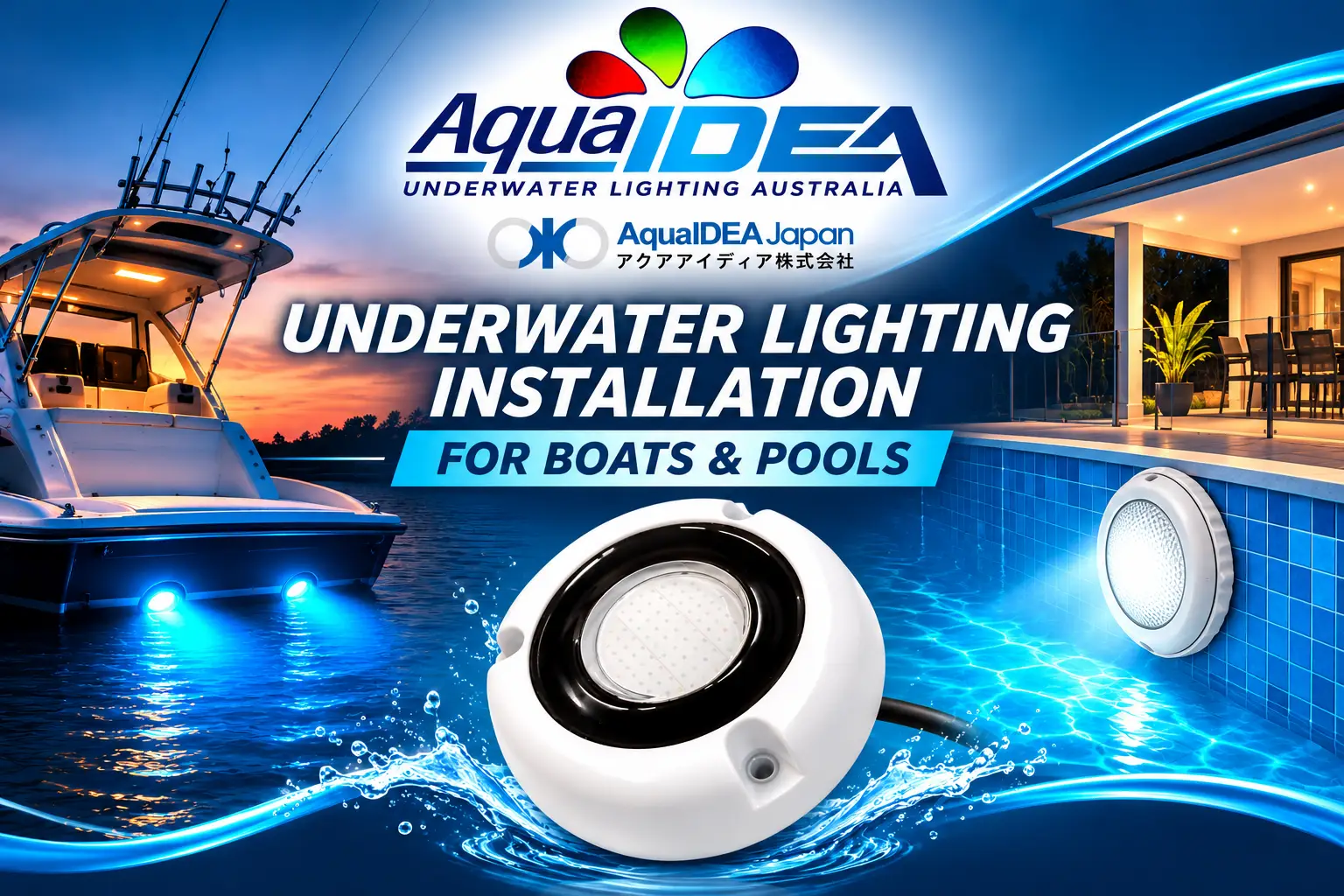
AquaIDEA’s premium Made-in-Japan underwater lighting is designed for projects where visual impact must be backed by serious submerged-duty engineering. For any renovation, the strongest result comes from pairing that quality of light with a mounting plan that respects the existing pool and the way its owners will use it after dark.
Choose lighting as part of the pool’s architecture, not as an accessory at the end of the works. When output, colour, fitment and protection are specified early, the renovated pool remains a place people want to use long after the sun goes down.


Comments