

RGB Versus White Pool Lighting: Which Suits?

A pool can look completely different after dark depending on one decision: whether its underwater lights produce clean white illumination or programmable colour. RGB versus white pool lighting is not simply a style preference. It affects how safely people move around the water, how the tile and interior finish present at night, how the pool connects to the home, and what the owner expects from the space.
For a premium residential pool, the best answer is usually the one that matches the pool’s primary role. A lap pool used most evenings needs dependable visibility. An entertaining pool designed as a centrepiece may benefit from colour scenes and control. For builders and installers, the decision also needs to account for mounting format, electrical compatibility, access for service and the quality of the underwater light itself.
RGB versus white pool lighting: the practical difference
White pool lighting has one clear job: to make the pool look bright, elegant and easy to read. Quality white LEDs reveal steps, ledges, depth changes and the waterline without distracting from the architecture. The result is classic and consistent, particularly around contemporary homes where neutral finishes, stone paving and restrained landscaping set the visual direction.
RGB lighting combines red, green and blue LEDs to create a broad range of colours and programmed effects. It can shift from a calm aqua or deep blue to a vivid party setting, often controlled through a dedicated controller, wall panel or compatible automation system. It turns the pool from a nighttime amenity into an active design feature.
Neither option is automatically more premium. Poorly engineered colour lighting can look uneven or overly theatrical, while a well-specified white system can feel exceptionally high-end. Equally, a refined RGB installation can add a level of flexibility that a single-colour system cannot provide. Output quality, beam design, installation and control all matter as much as the colour choice.
When white lighting is the stronger choice
White light suits owners who want the pool to feel open, polished and usable every night. It offers the most natural view through the water, which is particularly valuable in pools with steps, benches, shallow lounging areas or a darker interior. White illumination also makes the water appear clearer to the eye, although it does not replace proper pool maintenance.
A warm white tone can complement timber, travertine and softer landscaping, creating a relaxed resort-style atmosphere. Cool white tends to suit crisp architectural lines, pale tiles and modern external finishes. The right colour temperature should be selected in context with nearby exterior lighting. If the garden, alfresco and façade are all warm-toned, a stark cool-white pool light may look disconnected.
White is also the straightforward specification for clients who value simplicity. There is no need to choose scenes, synchronise colours or explain a controller. Switch the lights on and the pool is illuminated as intended. For a rental property, a family pool or a project where the lighting must remain intuitive for every user, that simplicity has real value.
From a performance perspective, white LEDs generally provide more usable perceived brightness for the electrical input than RGB lights set to an individual colour. This does not mean every white fitting is brighter than every RGB fitting. Lumen output, optical design, wattage, beam angle, pool size and water finish all influence the final result. It does mean white is usually the better starting point when practical visibility is the priority.
Where RGB lighting earns its place
RGB lighting is for pools that need to change character. A restrained blue setting can make the water feel cooler and deeper on a summer evening. Green can work beautifully with dense planting. A soft purple or magenta can create a distinctive entertaining atmosphere without adding extra portable lighting around the pool.
The strongest RGB installations are not constantly cycling through every available colour. They are programmed with a small number of considered scenes that suit the home and how it is used. One owner may use white or aqua for regular swimming, then select blue for relaxed evening entertaining. Another may prefer a brighter palette for celebrations. The flexibility is there when it is wanted, without becoming the focus every night.
RGB is especially effective where the pool can be seen from internal living areas. Through large glazing, coloured water becomes part of the evening outlook and gives the landscape a different visual layer. It can also work well in commercial hospitality settings, display pools and high-end developments where a memorable nighttime presentation supports the overall experience.
There is a practical trade-off. A coloured setting, particularly red or deep blue, may not show steps and pool contours as clearly as white. Owners should not mistake colour lighting for safety lighting. If the pool will be used for active evening swimming, ensure the chosen RGB system has a strong white mode or pair it with adequate white-oriented illumination around access points and paths.
Pool finish changes the result
The same underwater fitting can look very different in two pools. Pale interiors reflect light efficiently and tend to make white lighting appear bright, clean and expansive. They also give RGB colours a lighter, more luminous appearance. Deep blue, charcoal and black interiors absorb more light, often producing a dramatic mirror-like surface but requiring careful output and fitting placement to avoid dark areas.
Tile texture matters as well. Highly reflective glass mosaics can create sparkling points of light, while matte finishes spread illumination more softly. If the pool includes a wet edge, spa, water feature or tanning ledge, those features should be considered as separate visual zones. A single fitting location that works for the main pool may leave a raised spa or broad entry shelf underlit.
This is why lighting should be planned before construction rather than treated as a late electrical inclusion. The installer can position fittings to illuminate across the pool, rather than directly into the main viewing area from the house or entertaining zone. Correct placement reduces glare and helps the water look evenly lit.
Installation quality matters more underwater
An underwater LED fitting operates in a demanding environment. It must manage water ingress, chemical exposure, heat, cable routing and regular use over many years. For Australian pool projects, selecting a product designed and rated for submerged conditions is not optional.
Look beyond a headline wattage or a low purchase price. The housing materials, seals, cable entry, thermal management and mounting system determine whether the fitting remains reliable after installation. IP ratings are one useful part of the assessment. IP68 is associated with continuous immersion, while IP69 indicates strong protection against high-pressure, high-temperature water jets. The rating should be considered alongside the manufacturer’s installation instructions and the complete system design, not in isolation.
Mounting style also affects the finished result. Surface-mounted fittings can be a practical choice for upgrades, while flush-mounted lights deliver a more integrated appearance in new builds and premium renovations. The selected light needs to suit the pool structure and be positioned with future service access in mind. Saving a small amount during installation can become costly if a driver, connection or fitting cannot be accessed without unnecessary disruption.
For RGB systems, compatibility needs extra attention. The lights, controller, power supply and automation equipment must be specified to work together. Mixing components without confirming voltage, control protocol and load capacity can lead to inconsistent colours, flickering or limited functionality. A professionally planned system avoids these issues before the pool is filled.
A better way to choose for your project
Start with the view you want on an ordinary weeknight, not only during a party. If the answer is a bright, inviting pool that looks refined and supports regular swimming, white lighting is likely the right foundation. If the pool is intended to create atmosphere, extend entertaining and provide different moods through the year, RGB is worth serious consideration.
For many premium projects, the ideal specification is RGB lighting with a convincing white setting. It gives the owner everyday usability and the option to introduce colour when the occasion calls for it. The key is to verify the actual white output and light quality rather than assuming every RGB fitting performs like a dedicated white light.
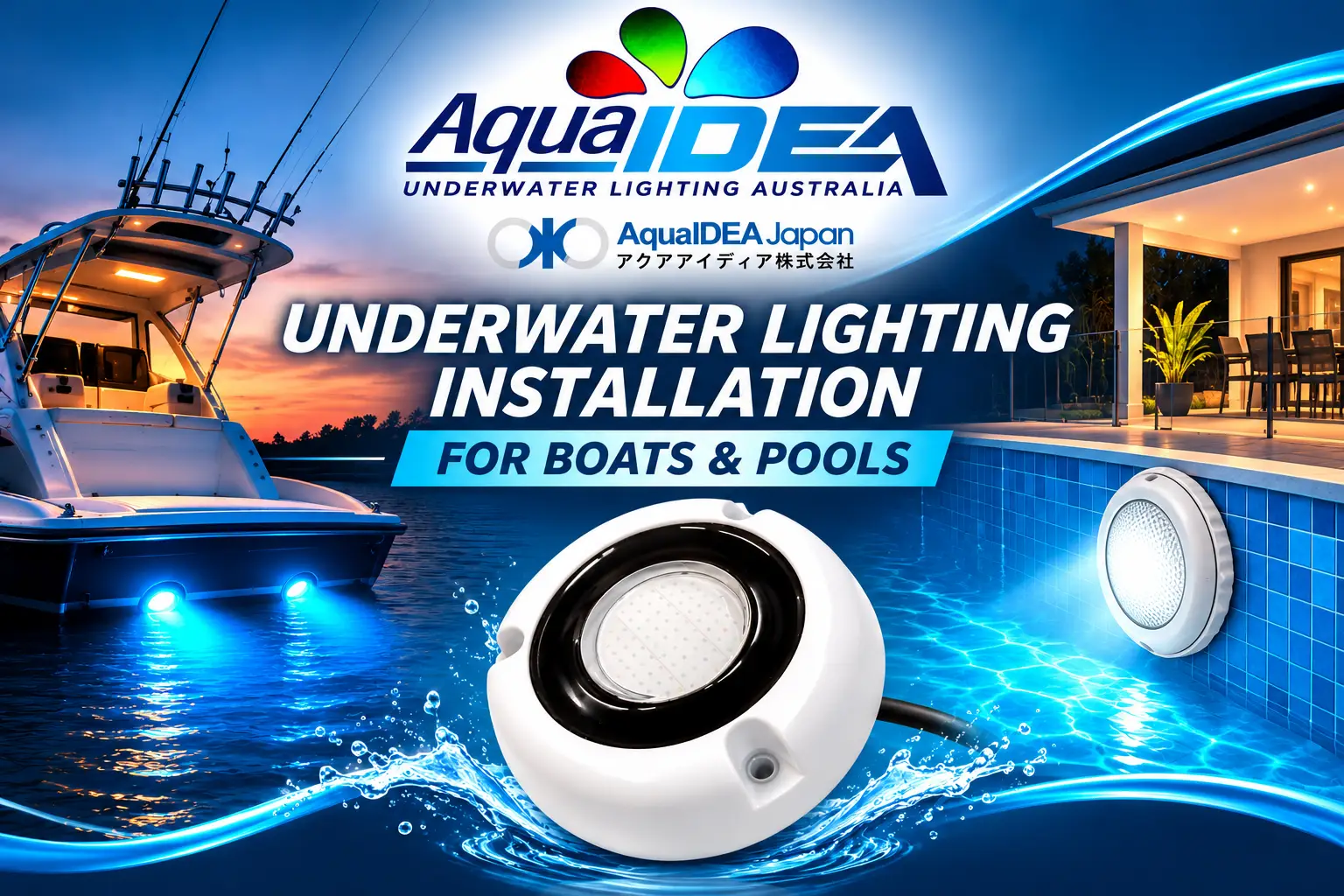
AquaIDEA’s Made-in-Japan underwater LED range is designed for projects where visual impact must be backed by engineering, durable construction and high-level water-ingress protection. Whether the brief calls for single-colour clarity or controlled RGB expression, specify the fitting around the pool’s finish, dimensions, mounting method and intended use.
The most successful pool lighting does not announce itself as a technical feature. It makes the water look exceptional, helps people use the space with confidence and gives the owner a reason to look outside after sunset.


Comments