

AquaIDEA AquaCore Material for Underwater Lights

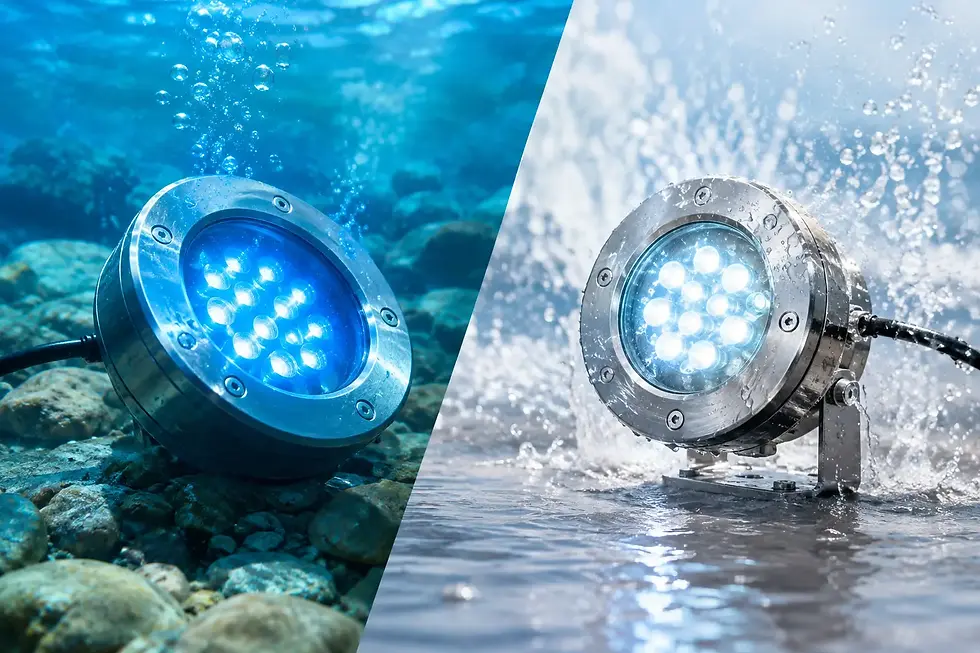
A transom light can look exceptional on launch night and still become a costly weak point if its material system is not suited to the environment. When assessing AquaIDEA AquaCore material for an underwater-lighting project, the focus should be broader than a material name alone. The relevant question is how the housing, lens, seals, cable entry and mounting hardware work together once they are permanently exposed to saltwater, chlorinated water, pressure, heat and regular cleaning.
For boat owners, pool owners and trade professionals, that distinction matters. Underwater fittings are expected to retain their finish, remain watertight and deliver consistent light output long after installation. A premium fixture needs engineering that supports its visual impact, not merely an attractive external surface.
What AquaIDEA AquaCore Material Needs to Deliver
In an underwater light, material selection is a performance decision. It influences corrosion resistance, thermal management, structural stability and the ability of seals to maintain compression over time. It also affects how the product tolerates vibration on a vessel, chemicals in a pool and the practical demands of installation.
AquaCore material should therefore be considered as part of a complete underwater-light construction rather than in isolation. Ask for the product-specific specification and assess the full assembly: the body, face or lens, rear enclosure, fasteners, cable gland and sealing interfaces. A strong housing cannot compensate for an unsuitable screw, poorly protected cable entry or incompatible seal.
This is particularly relevant in Australian conditions. A vessel based in a marina may spend months in warm, saline water, then travel at speed through rough conditions. A pool light can face UV exposure at the waterline, ongoing sanitiser treatment and changing water chemistry. The demands differ, but both applications punish shortcuts.
Corrosion resistance is about the whole installation
Marine corrosion is rarely confined to one component. Saltwater finds interfaces between dissimilar metals, damage around fasteners and areas where water can remain trapped. If the light is installed into an aluminium, steel, fibreglass or timber structure, the mounting arrangement must be compatible with the substrate as well as the fixture itself.
For marine projects, check the supplied hardware and follow the specified isolation method where required. A transom-mounted product and a flush-mounted product can experience very different installation stresses, even when their lighting performance is comparable. Flush installations demand careful surface preparation and accurate cut-out work, while external mounts need stable backing and properly sealed penetrations.
Pool installations have their own material considerations. Chemical balance has a direct effect on submerged fittings. High chlorine levels, incorrect pH or aggressive dosing practices can reduce the service life of components that would otherwise perform reliably. Good water management is part of protecting the lighting system.
Heat management affects LED life
LEDs use less power than older lighting technologies, but they still generate heat. Underwater operation can assist cooling, provided the fixture is designed to transfer heat effectively and is installed as specified. The construction around the LED module, internal driver and outer housing has a direct bearing on stable output and expected service life.
This is one reason a light should not be selected solely by its advertised brightness or colour options. A high-output white or RGB unit needs a construction that can manage thermal load while maintaining its sealing performance. For professional installers, it is worth confirming whether the manufacturer provides operating conditions, cable requirements and any restrictions for testing the light out of water.
Material Quality and IP Ratings Are Related, Not the Same
An IP rating is essential technical reassurance, but it does not describe every aspect of material durability. IP68 and IP69 ratings address protection against ingress under defined test conditions. They are meaningful indicators for products intended for demanding submerged environments, yet they do not automatically confirm resistance to poor installation, mechanical impact, unsuitable cleaning products or incorrect pool chemistry.
A premium underwater light should bring both elements together: a material system suited to its environment and a well-engineered enclosure that protects internal electronics. Japanese-made lighting is valued for this disciplined approach to detail, where fit, seal design, cable protection and finish quality support the stated performance level.
For buyers comparing products, avoid treating an IP rating as a substitute for installation instructions. A light may be highly protected at the factory, but a cable joint made outside the approved method can introduce the weakest point in the system. This is especially important when retrofitting older boats or renovating pools where existing wiring paths may be compromised.
Choosing the Right Fitment for the Material Environment
The best light format depends on the vessel or pool, the desired visual effect and the condition of the installation surface. There is no universal answer between flush-mounted and transom-mounted lighting.
A flush-mounted light offers a more integrated finish and may suit new builds, premium refits and hulls where a clean visual line is the priority. It requires precise installation, including correct cut-out dimensions and sealing of the exposed substrate. On some hull constructions, the cut edge needs additional protection before the fixture is installed.
A transom-mounted light can be a practical option for upgrades where minimising structural alteration is important. It remains highly visible as a design feature and can simplify future access, depending on the model and placement. The trade-off is that the mounting face and cable route must be carefully planned to avoid water tracking behind the unit.
For pools, consider the niche or mounting method, wall construction and access to service equipment. Concrete, fibreglass and tiled pool surfaces each require a different approach to penetration, sealing and finish protection. The correct material choice is only useful if the installation method preserves the integrity of the pool shell.
White or RGB changes the project brief
Material performance stays important whether the chosen light is single-colour or RGB, but the product choice should reflect the intended use. White light is often selected for clear, elegant illumination around a swim platform, hull or pool perimeter. RGB lighting introduces scene-setting flexibility and can create a stronger visual identity for entertaining areas, charter vessels or high-end outdoor spaces.
RGB systems may add control equipment and wiring considerations. Before specifying, confirm controller location, cable runs, compatibility across fixtures and access for future servicing. A well-finished housing is only one part of an installation that must perform as a complete system.
Installation Details That Protect Long-Term Performance
The most durable underwater light can be undermined by rushed preparation. Trade installers should inspect the mounting surface, confirm cable routing and establish the sealing sequence before drilling or cutting. Boat owners commissioning an upgrade should expect this level of planning from the installer.
Pay close attention to the cable entry. Cables should be supported, protected from abrasion and routed so water cannot track along them into an enclosure. Avoid sharp bends, pinch points and unapproved joins. Where a through-hull penetration is required, the sealing product and method should suit both the fixture and the hull material.
Fasteners deserve equal care. Correct torque matters because overtightening can distort a sealing face, while insufficient tightening can leave a path for water ingress. If bedding compound is specified, use it exactly as directed rather than substituting a familiar product from another job.
After installation, test lighting functions and controls before the vessel is returned to service or the pool is handed over. Record the product model, wiring layout and controller details. That simple record assists fault-finding, future upgrades and trade handovers.
Maintaining the Finish Without Damaging the Light
Routine care is modest, but it should be deliberate. In marine use, rinse accessible external surfaces with fresh water where practical and remove marine growth using non-abrasive methods approved for the fixture. Avoid harsh solvents, metal tools and aggressive polishing compounds that can scratch lenses, damage coatings or compromise seals.
For pool lights, maintain balanced water chemistry and clean surrounding surfaces carefully. If a light shows condensation, flickering, inconsistent colour behaviour or visible damage, isolate the system and have it inspected. Continuing to operate a suspect submerged fitting is not a sensible maintenance strategy.
Before a vessel’s busy season or a pool handover, inspect each light for secure mounting, lens condition, cable damage and normal operation. This is also the right time to check that controllers, switches and power supplies remain dry, accessible and correctly protected.
For premium underwater illumination, specify the material system with the same care as output and colour. The best result is a light that suits the installation, is fitted to the manufacturer’s requirements and continues to make the waterline, transom or pool look considered well beyond the first switch-on.


Comments